Monday, June 18, 2018

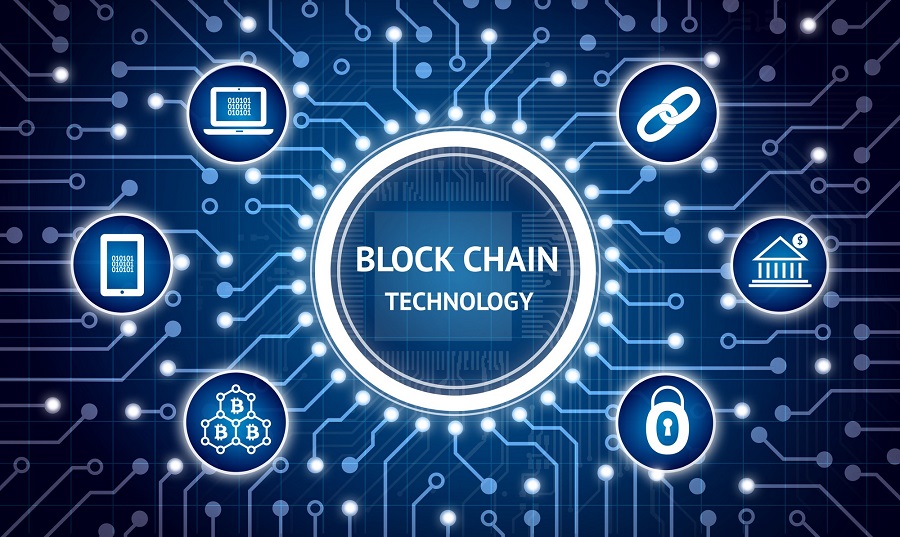
How Blockchain Technology is Transforming the Data Center Infrastructure

Even though cryptocurrency is still a controversial discussion topic, there seems to be a consensus that blockchain, the technology behind cryptocurrency, is revolutionary. Companies like Google and Goldman Sachs are actively investing in blockchain firms. So data centers and cloud hosting services need to prepare themselves to serve the requirements of these new blockchain-based companies. These businesses will need a lot of data center resources and cloud management services in the coming years.

Blockchain: A Simple Introduction

The journey of modern blockchain started with a 2008 white paper called Bitcoin: A Peer-to-Peer Electronic Cash System. The paper described a form of digital cash that can live on a distributed network without any centralized authority. The blockchain is the technology that supports this system.

A blockchain is basically a distributed digital ledger or database. The whole network contributes to its creation and maintenance. So there is no central authority who can manipulate the blockchain.

In a blockchain environment, when two parties have a transaction, they advertise it to the network. Various network nodes pickup multiple transactions and organized them into blocks. Then miners use their computers to add this block to the ledger or blockchain.

Miners need a lot of computing power to add the blocks to the blockchain because each block comes with a mathematical puzzle attached to it. Solving this puzzle takes computing resources. Miners are interested in this task because they are rewarded with tokens for adding a block to the blockchain.

The blockchain is an important technology due to its implications for business transactions. Before blockchain, a trusted third-party like a bank or a government institution was the only way to guarantee the integrity of a transaction between two parties. Blockchain eliminates that need. It opens up the possibility for business transaction between parties across the world. Strangers can transact with each other across countries and borders without the help of any financial or government institutions.

Blockchain-related Concerns for Data Center and Cloud Hosting Companies

The rise of blockchain technology means data center and cloud management services have to adjust to the changing realities on the ground. Here are some issues that data center managers should be aware of:

Elevated Demand for GPUs

Miners provide the computing power for blockchain cryptographic calculations. As the popularity of cryptocurrencies and blockchain-based applications increase, there will be more demand for computing power.

Data managers should be aware that blockchain-based calculations are best performed on graphical processing units (GPUs). AMD and NVIDIA graphics card prices have surged due to the rise in blockchain-based applications. Click here to visit original source.

Contact Details:
Telehouse America
7 Teleport Drive,
Staten Island,
New York, USA 10311
Phone No: 718–355–2500
Email: gregory.grant@telehouse.com

Monday, June 11, 2018

Neural Networks: How Data Centers are Catering to Future Demands


The progress of neural network algorithms is ushering a new age of artificial intelligence (AI) applications. Both machine learning and deep learning disciplines of AI use neural networks. The increase of these algorithms have implications for your data centers. Whether you have a data center in Los Angeles or Tokyo, your facility needs to be able to meet the server and network requirements and handle the extra workloads.

Basic Understanding of Neural Networks

The inspiration for artificial neural networks is the human brain. The brain has billions of neurons. The neurons communicate with each other and create complex decision trees. The human cognitive ability is the result of these decision trees. As a human being learns new things, new neurons are created and new connections are formed.

Artificial neural networks follow the same principle. To form an artificial neural network, data scientists feed training data to machine learning or deep learning algorithms. These algorithms use the known data to form neural networks. In other words, the algorithms use the input data to learn.

Suppose, you need a neural network that can recognize cats. In a machine learning scenario, data scientists will create a model and then feed the model with known cat images, also known as training data. Each node or neuron of the model would represent a particular quality and a certain weight. During the training process, the algorithms will recalibrate the weights of the nodes to improve the accuracy of the overall neural network results.

Depending on the complexity of the task, it can take a few hours or it can take days to process the training data and create a functioning artificial neural network. Computer processing power plays a vital role in forming these networks.

Changing Landscape of Data Centers due to Neural Networks

Neural networks are affecting data centers in two ways. It’s creating new requirements for data centers to serve AI-based applications. Also, AI-based applications help data centers optimize their own services. Here are some pointers to prepare for the future:

Rising Demand for GPU-based Processing

Any data center looking to attract AI-related businesses need to understand the importance of GPU-based processing in neural network applications. Visit original source.

Contact Details:
Telehouse America
7 Teleport Drive,
Staten Island,
New York, USA 10311
Phone No: 718–355–2500
Email: gregory.grant@telehouse.com

Wednesday, May 30, 2018

Transforming Your Business to More Digital Capable and cloud Consumable Applications and Services


The cloud landscape continues to evolve as businesses move to multi-cloud approaches for developing, deploying and delivering applications. This mix of public, private, on-premises, off-premises, cloud interconnects, and SaaS creates a number of strategy and implementation challenges. By partnering with managed IT services, New York businesses as well as those around the globe are finding ways to mitigate those challenges.

Though the needs of each business and the paths may be slightly different, they all can deliver cloud consumable applications and services needed by a digital capable business. The shared goal is to take advantage of all available options to efficiently, flexibly and cost effectively deliver a growing portfolio of applications and services. These managed services solutions enable efficient application management across providers and models.

The leading managed services providers can deliver all connectivity solutions as well as access to a huge list of cloud providers. This helps businesses develop a detailed approach to their digital operational and customer facing capabilities.

The first step is to start with business goals that inform decisions about application and services migration, placement, management and monitoring. These managed services solutions will provide a centralized ability to weigh costs, access, security, compliance and myriad other factors to come up with an answer across all the varying cloud formations.

Data center managed services provide end customers with access to:


  • IT expertise for engineering, management and monitoring of assets and environments via best practices that support ad hoc and ongoing needs
  • New skills and solution provider resources across infrastructure, technical management and cross vendor application management

Application access and uptime is critical to every business, so monitoring becomes an important component to cloud data center operations.

Source.

Contact Details:
Telehouse America
7 Teleport Drive,
Staten Island,
New York, USA 10311
Phone No: 718–355–2500
Email: gregory.grant@telehouse.com

Monday, May 14, 2018

3 Reasons Why You Should Adopt Hybrid Cloud Strategies


The public cloud was once hailed as the premier option for unlimited, accessible data storage. However, on-premise private cloud solutions still offer better security, speed and control – especially when managing private data. Find out why hybrid cloud strategies are the best way for companies to enjoy the benefits of both private and public cloud storage – and how colocation service providers support such needs.

Workflows and Partnerships


Colocation facilities can support the collaboration benefits of a hybrid cloud strategy in multiple ways. Foremost, tenants in a colocation service provider can securely access one another’s applications and data upon mutual request. This creates a safe space in which to collaborate, expanding each businesses capabilities in a secure way that wouldn’t otherwise be achievable.

Another benefit of hybrid cloud models is that they offer decreased latency, which is the length of delay between a service and a request. Latency is often improved when cloud servers are geographically closer to the request source, as the request has a shorter distance to travel. Since a colocation service provider allows companies to store their private cloud in a nearby location, this can help increase latency when the public cloud isn’t as fast. In turn, this helps increase workflows by speeding up requests.

Security, Control, and Colocation Service Provider


Today’s businesses are seeking increased flexibility in data management without having to sacrifice high-stakes security. This is especially true for the healthcare, finance and retail industries, which often have certain compliance regulations regarding how and where data can be stored.

Although these companies can’t store such data on the public cloud, they often still need access to applications and tools that are available only on the public cloud. Data center colocation providers are a great solution to these security and accessibility needs because they keep private patient and customer information secure while meeting strict requirements. Click here to visit original source.

Contact Details:
Telehouse America
7 Teleport Drive,
Staten Island,
New York, USA 10311
Phone No: 718–355–2500
Email: gregory.grant@telehouse.com

Tuesday, May 1, 2018

Understanding The Role of Artificial Intelligence in The Data Center Industry

The amount of global data being stored, processed and managed continues to grow exponentially each day. In turn, artificial intelligence is playing a pivotal role in helping data center service providers capture, process and analyze this data at a faster and more powerful rate than ever before. From automated monitoring systems to advanced energy savings, here’s how artificial intelligence is improving the operations and efficiency of global data centers.

What Artificial Intelligence Means for Data Center Service Providers

Artificial intelligence isn’t a new concept, and tools like face detection and voice recognition already play a major role in our daily lives. Strava, Inc. Staff Engineer Drew Robb adds that object identification, classification, and other forms of geographic and identity detection are leading AI uses in the enterprise market.


All of these applications place an increased strain on data centers because they require increased data storage and processing in order to run. Managing this immense increase in data requires that the data center industry scale, adapt, and acquire more computing power. Artificial intelligence enables the data center service provider to meet such demands in a variety of ways, including operational automation, elastic computing power and predictive maintenance.

Improving Data Center Efficiency

Increased data processing requires that data centers keep hardware cool. With more data to process and hardware working harder, however, this drives up energy costs and increases the overall resource footprint of data centers.

Fortunately, machine learning is playing a vital role in helping companies understand their data center energy consumption. As explained in Datacenter Dynamics, artificial intelligence is being used to analyze temperature set points, evaluate cooling equipment and test flow rates. The use of AI-powered smart sensors can receive data from numerous sources and relay that information as environmental, electrical and mechanical insights. In addition to detecting sources of energy inefficiencies, machine learning can also be automated to make informed decisions that reduce data center energy consumption and cut costs.

Software solutions business manager Stefano D’Agostino adds that, “innovative startups are using intelligent machines with self-learning algorithms to optimize the allocation of the IT load itself so that optimal cooling can be achieved.” The benefits of such technology is already being realized, and statistics from The Data Center Science Center show that advancements in UPS efficiency and cooling energy losses have helped ordinary data centers cut physical infrastructure costs by 80% over the last decade.

This shows that, even though artificial intelligence technology is partly responsible for an increase in data center processing, it can also be used to mitigate its own increases in energy consumption.

Strengthening Data Center Security

In addition to improving energy efficiency, AI can also improve security of a data center. New York businesses rely on Telehouse because we’re committed to proactively managing customer data and reducing security risks wherever possible. We’re also tuned in to the latest advancements in AI security applications, which can screen and analyze data for security threats at a more thorough and rapid rate. AI can also help assess normal and abnormal patterns, detect malware and spam, identify weak areas and strengthen protection from potential threats.

Detecting and Reducing Downtime
Another way that artificial intelligence can influence the modern data center service provider is through improved outage monitoring. In fact, AI monitors have the ability to predict and detect data outages before they even occur. They also have the ability to track and detect server performance, disk utilization, and network congestions.

Today, artificial intelligence offers advanced predictive analytics services that make it easier and more reliable to monitor power levels and potential trouble areas. Click here to visit original source....

Contact Details:
Telehouse America
7 Teleport Drive,
Staten Island,
New York, USA 10311
Phone No: 718–355–2500
Email: gregory.grant@telehouse.com

Tuesday, March 27, 2018

Solutions for Disaster Recovery that Protect Smart Cities

Based on a statement from Gartner, a technology research and advice firm, there are roughly 2.3 billion connected things smart cities such as New York, Tokyo, and London use. Compared to 2016, that number represents a 42 percent increase. Soon, smart cities will be the catalyst behind an economic boom and improved quality of life for people living in them.

As the backbone of smart cities, it is imperative that data centers and colocation sites have the right disaster recovery solutions in place. Not only will this ensure flawless connectivity and top data security but also public health and safety.

To streamline city services, smart cities rely on rich data in real time. Software, hardware, and geospatial analytics can improve on livability and municipal services. With enhanced sensors, the Internet of Things (IoT) can reduce the amount of energy consumed by street lights and preserve resources by regulating water flow.

Due to the location of many smart cities, as well as other potential risks, disaster recovery cloud services are vital. Disaster recovery providers protect power and communication caused by power outages, floods, and even cyber attacks. To continue reading and visit source click here.

Friday, March 23, 2018

Benefits of Integrating the Cloud and AI


There are many benefits of integrating the Cloud and AI. As for AI, it touches every industry around the globe. As part of this technology are machine learning, deep learning, computer vision, and natural language processing (NLP), which give computers faculties that mimic humans such as seeing, hearing, and even deductive reasoning.


Many enterprises need to process a tremendous amount of data efficiently, quickly, and accurately. Therefore, they depend on AI-capable colocation data centers. The need for enterprise AI applications is growing so fast that one research company predicts revenue will reach the $31 billion mark within the next seven years.

For predictive analytics programs, the top industries include education, health care, financial, and telecommunication. The goal is to target new business opportunities and improve the customer’s experience. A perfect example is a bank that uses an AI system for tracking information about credit card transactions. With pattern recognition, this bank can identify fraudulent acts.

A Unique Relationship

Cloud computing facilitates much of the progress in AI and machine learning. With massive data to analyze, Cloud computing is now more critical for delivering AI solutions. Along with prominent Cloud platforms such as Google and Microsoft, several smaller ones are integrating AI technologies.

With a unique relationship, the Cloud delivers data learned by AI systems. At the same time, AL provides information that expands the data available to the Cloud. For improving storage, computing, and other Cloud services, AI will become even more critical than it is now.

Data center colocation providers and the Cloud work like a well-oiled machine. Data center colocation services will continue to provide an infrastructure strategy for a host of companies, while AI will keep integrating with the Cloud, which will increase the need for colocation services.

Telehouse CloudLink, a connectivity exchange for customers with multiple Cloud providers, guarantees a safe and private connection between company networks and Cloud services.