Friday, June 30, 2017

Telehouse Green: How Green Is My Cloud?

Telehouse-Green-Cloud

UNDERSTANDING THE ENERGY EFFICIENCY OF CLOUD-BASED COMPUTING
Forrester estimates that worldwide spending on Public Cloud computing services will grow to $160 billion in 2020, a 22 percent annual growth rate from just five years ago. And it’s not just Public Cloud that is experiencing a spike, but Private and Hybrid Cloud usage too.
Among enterprises with 1000 or more employees, Private Cloud adoption increased from 63 percent to 77 percent, and Hybrid Cloud rose from 58 percent to 71 percent from 2015 to 2016, according to RightScale’s 2016 State of the Cloud survey. Enterprises that use the Cloud are, on average, leveraging three Public Clouds and three Private Clouds, each.
Businesses are increasingly opting to switch from internal resources to cloud-based computing to enjoy benefits such as faster scalability of capacity, pay-as-you-go pricing, and access to cloud-based applications and services without the need to purchase and manage expensive on-premises infrastructure.
But whether you’re considering a Public, Private or Hybrid Cloud configuration, as-a-service computing offers another distinct advantage over on-premise alternatives: It’s comparatively greener. A study by Accenture found that for large enterprise firms, Cloud adoption can cut energy use and carbon emissions by 30 to 60 percent in comparison to on-premise IT infrastructures. And for mid-sized firms using the Cloud, carbon emissions and energy consumption can be reduced by as much as 60 to 90 percent.
Let’s examine why.
Green That Is Virtually Self-Evident
Some of the reasons why cloud-based infrastructure is greener than on-premises equipment are…well…virtually self-evident.
Virtualization, the definitive technology at play, enables a single physical server to run multiple operating system images simultaneously. Through consolidation, server virtualization reduces the total physical server footprint. Less servers mean less power consumed and a reduced carbon footprint. Also, when less equipment is required to run workloads, this reduces data center space, and with less physical equipment plugged-in, a facility will consume less electricity.
It’s interesting to note that virtualization is nothing new. In fact, IBM pioneered the concept in the 1960s, but its potential has only been fully realized with the advent of modern data center and server technologies. Visit here for original source….
Contact Details:
Telehouse America
7 Teleport Drive,
Staten Island,
New York, USA 10311
Phone No: 718–355–2500
Email: gregory.grant@telehouse.com

Telehouse for Technophiles: Can Your Data Center Survive the Next Big Earthquake?

A Look at Disaster Preparedness in Los Angeles-Based Data Centers
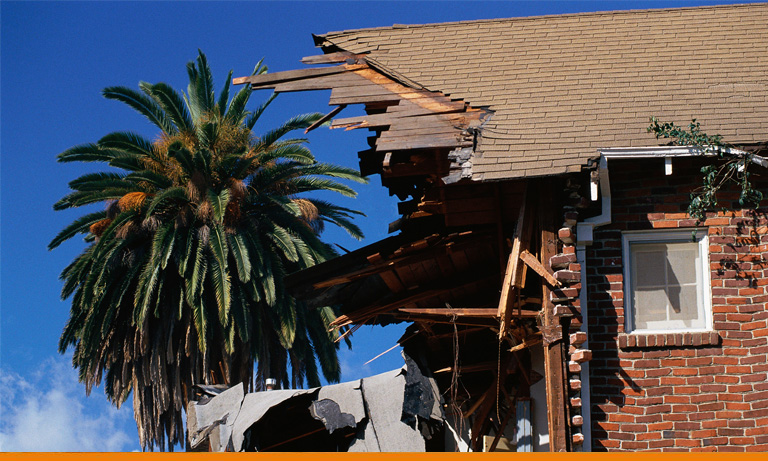
The ground shook violently, car alarms shrieked and retail boutique windows shattered across the busy sidewalks of Hollywood Boulevard. On January 17, 1994, a 6.7-magnitude earthquake struck just 20 miles west of Los Angeles, producing the strongest seismic disturbance ever recorded in a North American city. This was the costliest natural disaster to strike the United States at the time, causing billions of dollars of structural damage and economic loss, and severely damaging hundreds of buildings throughout the Los Angeles metro area, including skyscrapers, hospitals, stadiums and apartment complexes.
Data-Center-Disaster-Preparedness.jpg
Positioned along the San Andreas Fault, California experiences 10,000 earthquakes on average every year, according to the United States Geological Survey. While most are mild enough to go undetected by the general public, roughly 15 to 20 of these earthquakes reach a magnitude greater than 4.0, thereby exposing vulnerable structures to significant damage.
In California, earthquakes aren’t a seasonal threat like hurricanes, but can strike at any time without warning. Experts predict there is a 67 percent chance of an earthquake with a magnitude of 6.7 or greater striking Los Angeles within the next 30 years.
Disaster Recovery Planning is the Key to Business Continuity
Faced with an earthquake, a company’s information may not be irretrievably lost, but without access to critical data like customer and financial records, its business operations likely won’t be able to withstand the event. An earthquake of high magnitude can easily disable an enterprise data center or colocation site through damage to the structure of the building, equipment, its ability to access power, or the many connections established within the facility.
Data center operators, particularly those in California, must have an adequate disaster recovery plan to mitigate the threat of downtime during an earthquake. Disaster preparedness in seismic-sensitive regions requires a combination of virtual and physical safeguards to ensure the facility’s continued operations. Secondary, offsite backups are a common way for data centers to prepare for disaster. By replicating data in the cloud, data center operators eliminate a single point of failure, ensuring that mission-critical information remains fully accessible. Continue reading from original source….
Contact Details:
Telehouse America
7 Teleport Drive,
Staten Island,
New York, USA 10311
Phone No: 718–355–2500
Email: gregory.grant@telehouse.com

Tuesday, June 20, 2017

Disaster Recovery Solutions and Colocation Facilities Are Critical to Protecting the Data of Smart Cities


According to Gartner, the technology research and advisory firm, this year, an estimated 2.3 billion connected things will be used in smart cities, which includes major metro areas such as New York, London and Tokyo. That projection represents a 42 percent increase in the number of connected devices since 2016.
Rapid urbanization has mandated the need for smart city solutions. Experts worldwide point out that smart cities will be the future enablers in accelerating economic growth and improving the quality of life of metropolitan citizens. As we will learn later in this blog, because colocation facilities and data centers provide the backbone of smart city infrastructure, having viable disaster recovery solutions in place will become essential not only to smart, public services but for maintaining public health and safety.
Smart cities rely on interconnected devices to streamline and improve city services based on rich, real-time data. These systems combine hardware, software and geospatial analytics to enhance municipal services and improve an area’s livability. IoT-enabled sensors, for example, can reduce the energy expended in street lights or regulate the flow of water to better preserve resources.
But with the global IoT footprint expected to surpass 50 billion connected devices by 2020, smart cities will need to strengthen disaster recovery methods for both unexpected natural and man-made incidents that would adversely impact their ability to rely on accurate data to properly function. While we don’t like to think about it, some of the world’s smart cities are in low-lying coastal areas that are prone weather-related emergencies, such as flooding, or are situated on grids whose history suggests the possibility of future outages. Also, unfortunately, there is the ever-present threat of cyberattack and the destruction or sabotage of physical infrastructure.
To look at but one real world scenario, if hackers targeted a smart city’s Supervisory Control and Data Acquisition (SCADA) system, which some cyber defense experts claim are susceptible to intrusions due to poor security protocols, they could potentially shut down multiple city services from a single entry point and threaten public health and safety.
For this reason, and as more and more cities around the world adopt smart initiatives, it becomes mission-critical to make data security a priority. Just as public utilities such as power, gas and water are physically protected and secure, smart city planners need to secure data by implementing failover and backup in all systems and networks extending to the data centers that form the key infrastructure for providing IoT-enabled services. Disaster Recovery preparedness, which starts with accessible data backup, is the foundation of business and smart city continuity. Continue reading from original source….
Contact Details:
Telehouse America
7 Teleport Drive,
Staten Island,
New York, USA 10311
Phone No: 718–355–2500
Email: gregory.grant@telehouse.com

Monday, May 29, 2017

Telehouse Global: The Impact of Technology on Higher Education

BUILDING A SAFER, SMARTER AND MORE CONNECTED WORLD, ONE CAMPUS AT A TIME

Higher education directly affects social mobility and economic development on a global scale. For this reason, innovative technologies enabled by advanced colocation services are being developed to make higher education more attainable, affordable and effective for students from a wide range of socio-economic backgrounds and geographic regions. Leveraging the power of the Internet of Things (IoT), Big Data analytics, OTT streaming technologies and advanced online learning platforms, institutions are providing access to an array of new opportunities for high-quality educational experiences.
Technological innovation is fundamentally changing how universities interact with students, enabling global institutions from both the public and private education sectors to adopt various trends such as adaptive learning technologies that monitor student progress, mobile applications that enable students to remotely access course material, and next-gen learning management systems that deliver a holistic view of educational development.
Once the province of for-profit institutions, online classes are now offered at top tier universities such as Harvard, Yale and Brown, as well as mid-level and community colleges worldwide. The growing popularity of online education is due in part to the ability to provide course material in a way that is not only flexible, but immersive, utilizing mobile technology, web-based video communications, and access to a seemingly endless supply of online content and resources.
These same technologies have also granted globally dispersed universities and research organizations the ability to partner and collaborate on many influential research projects. At the University of Wisconsin, for example, agriculture students and faculty work alongside various Chinese research universities and organizations to analyze environmental factors affecting the milk yield of cows and develop solutions for the advancement of the dairy industry.
Technology is also helping universities make their communities safer, smarter and more efficient. Use of IoT devices and smart technology are pervasive throughout university campuses, ranging from automated emergency alerts and outdoor Wi-Fi access points, to smart laundry facilities and responsive HVAC systems. Data collection has also opened the door to the use of advanced analytics that help university administrators better understand and satisfy the needs of their student body with technologies such as smart map apps that help them navigate the campus, and IP-enabled cameras for enhanced security. Continue reading from original source….
Contact Details:
Telehouse America
7 Teleport Drive,
Staten Island,
New York, USA 10311
Phone No: 718–355–2500
Email: gregory.grant@telehouse.com

Monday, May 22, 2017

TELEHOUSE TUTELAGE: EDGE COMPUTING IN THE ERA OF IOE

Micro Data Centers and Colocation Providers Will Enable a Future of Ubiquitous Connectivity

Driverless cars, drone-powered product delivery, and remotely monitored, environmentally controlled doghouses are but a few examples of the wondrous Internet of Everything. For the uninitiated, the Internet of Everything, or IoE, builds on the foundation of the Internet of Things (IoT) by adding network intelligence that allows convergence, orchestration and visibility across previously disparate systems. As we will learn further on, both micro data centers and colocation providers will play an integral role in enabling a future of ubiquitous connectivity.

One can envision the IoT as the equivalent of a railroad, including the tracks and connections, whereas the IoE is the railway line, as well as the connected trains, rail weather monitoring systems and sensors, departures and arrivals board, and even staff and customers. The Internet of Everything connects all these separate “things” into one cohesive whole, enabling these IoT-enabled devices and connected humans to communicate and share data with each other in real time.
Metaphors aside, the enormity of on-demand connectivity, compute, networking and storage necessary to enable the IoE will be challenging. Research firm Gartner forecasts that 8.4 billion connected things will be in use worldwide by the end of the year, up 31 percent from 2016, and reach 20.4 billion by 2020.
Considered a direct outcome of the growing interest in IoT and IoE, edge computing brings bandwidth-intensive content and latency-sensitive applications closer to the user or data source. With edge computing, IT professionals can provide data processing power at the edge of a network instead of maintaining it in a Cloud. Because of the need for high-speed computing — which, for example, would be critical for a driverless car to be able to stop for traffic signs and avoid fender benders — edge computing is considered more reliable than Cloud computing.
While much information will still be uploaded and processed through the Cloud, some applications will demand ultra-fast access to data, requiring the use of physical infrastructure that is closer to the edge versus where the data is centrally stored. However, as information is exchanged between more local and centralized data center facilities, one must consider the challenges that will emerge as a consequence. These include possible service disruption as well as latency and network reliability issues.
The reality is that to enable the IoE many organizations will deliver specific IoT applications and services from a variety of data centers ranging from smaller in-house networking facilities to large colocation data centers. And this will have implications for the overall levels of resilience and security that will be expected.
Large data centers and colocation facilities have the highest standards for such functions as data backup, failover systems and physical security. Backups are performed regularly and there is ample storage and server redundancy, enhanced by virtualization, in the event of equipment failure. Highly redundant power and cooling systems are de rigueur, and physical security is strictly enforced to ensure no unauthorized access. Click here to visit original source...
Contact Details:
Telehouse America
7 Teleport Drive,
Staten Island,
New York, USA 10311
Phone No: 718–355–2500
Email: gregory.grant@telehouse.com

Tuesday, May 16, 2017

TELEHOUSE GLOBAL SPOTLIGHT: OTT VIEWERSHIP IS FAST BECOMING OVER THE TOP

Colocation Provides a Solution to OTT Performance


Over-the-Top (OTT), in telecom parlance, refers to an app or service that delivers content such as streaming video and audio over the internet rather than traditional cable or satellite distribution. According to the 2017 OTT Video Services Study conducted by Level 3 Communications, viewership of OTT video services, including Netflix, Hulu and Amazon Prime, will overtake traditional broadcast TV within the next five years. Meanwhile, Juniper Research predicts that the global OTT market will increase to $18 billion in 2019, up from $8.5 billion just three years ago.

Additionally, it’s worthy of note that the audience for OTT content is growing not only in total viewership and revenue, but geographically. Last year, Netflix tripled its global reach by expanding into an additional 130 countries as the video streaming service took its most aggressive step yet in its plans for international growth.

The reason for the surge in OTT viewership lies in immediate gratification: People want what they want when they want it. OTT allows viewers to consume content whenever and wherever they desire on their preferred device. Particularly for millennials, appointment TV is now widely considered a legacy entertainment model.

Supporting the increasing volume of streaming video requires solutions to the hosting, delivery, bandwidth and performance challenges that all too frequently frustrate the Quality-of-Service and experience of online video viewers. Whether at the source or along the last mile, insufficient bandwidth creates interruptions that result in dreaded buffering pauses. Content providers address bandwidth challenges by compressing data and bringing content closer to users by placing the data on edge servers in strategically located data centers and colocation facilities around the world. However, in order for OTT players to successfully reach their audience, it’s critical to collocate within data centers capable of providing low-latency connectivity to end users throughout their target geographic regions. Click here to visit original source...


Contact Details:
Telehouse America
7 Teleport Drive,
Staten Island,
New York, USA 10311
Phone No: 718–355–2500
Email: gregory.grant@telehouse.com
Wednesday, May 10, 2017

SMART CITIES: ENABLING A BETTER QUALITY OF LIFE

Defining the Phenomenon Sweeping the World’s Major Metropolitan Areas


Toward the end of the last decade, the number of humans inhabiting the Earth crossed the seven billion mark, with the majority of people living in metropolitan areas. According to the World Health Organization, urban residents account for 54 percent of the total global population – a number that is expected to grow nearly two percent each year until 2020. As a result, it’s become critical to establish greener and more efficient technology in major metropolises.

Once the realm of science-fiction, today, “smart cities” are being established around the world, transforming how we live through the use of innovative technology and analytics. A smart city is defined by the integration of information and communication technology (ICT) and IoT devices to manage a variety of public assets, while acquiring critical data on an ongoing basis to improve the lives of its citizens.

According to research firm Frost and Sullivan, there are eight elements that comprise a smart city, including smart governance and education, smart healthcare, smart building, smart mobility, smart infrastructure, smart technology, smart energy and smart citizen. Cities that successfully integrate at least five of these eight markers receive the distinction of being a smart city. In addition, Frost and Sullivan estimates a combined market potential of $1.5 trillion globally across these various smart city categories.

The core focus of the world’s smart cities is to enable a better quality of life for all residents and visitors. Utilizing smart technology, officials gain enhanced visibility into the inner workings of the city on a granular level, enabling them to identify services needed by citizens. For example, in New York City, the LinkNYC program is in the process of transforming 7,500 former payphones into digital hubs, providing the public with free Wi-Fi, charging ports, and access to directions and city services. Boston has implemented solar-powered benches that not only allow users to charge their mobile devices, but send environmental data to government officials via advanced sensors in hopes of improving the city’s livability. Click here to visit original source...


Contact Details:
Telehouse America
7 Teleport Drive,
Staten Island,
New York, USA 10311
Phone No: 718–355–2500
Email: gregory.grant@telehouse.com