Friday, April 24, 2020

Developing a Cloud-Based Data Backup Strategy for Higher Education


Just as with every other sector, higher education grapples with mounds of data from countless sources that are critical to operations. This includes everything from student and faculty information to intellectual property related to research contracts. All of this critical data requires disaster recovery services to ensure that the data remains secure and accessible within and beyond the network edge.
disaster recovery services
Much higher education institutions are in the process of data center consolidation across central and satellite campuses with a cloud-based data backup part of the strategy. Over 60 percent of higher education institutions are looking at incorporating cloud computing into their IT strategy according to a survey conducted by MeriTalk. As part of that shift, many of these institutions are making college backup and DR decisions around cloud-based storage solutions.
Visit Original Source to read more.

Contact Details:

Telehouse America
7 Teleport Drive,
Staten Island,
New York, USA 10311

Phone No: 718–355–2500

Email: gregory.grant@telehouse.com


Monday, December 30, 2019

Why Put Colocation Providers at the Center of Your Cloud Strategy

colocation service providers

As your business’ cloud strategy evolves to meet changing needs in the digital age, leading colocation providers have also evolved to respond to meet those needs. Colocation use continues to grow because leading providers are increasing their integrated solution offerings in ways that change the use dynamic from “cloud or colocation” to “cloud and colocation.”

We can trace this change to the continued growth of hybrid and multicloud strategies making up a crucial part of the framework of digital business needs evolution. The growth is most apparent in Gartner’s prediction that over 75 percent of midsize and large organizations will have adopted either a multi-cloud or hybrid-cloud strategy by 2021.

Some things remain constant in a business’s evolving cloud strategy. An example is the highly predictable workloads with consistent utilization benefiting from lower operating costs in a colocation data center.

On the other end of the spectrum are workloads and applications that are constantly evolving in terms of access, storage, compute, and security needs where a private cloud may be more helpful. Even public cloud workloads can evolve to where it cost more to use public cloud storage than to house them in private cloud storage.

Since most businesses are looking for ways to get out of the data center ownership business, colocation provides the flexibility of need with these evolving workload cost, security, and access structures. Colocation providers have evolved to deliver cost-effective private cloud options and management services to take the Capex and operational burden off IT and the organization.

Visit source to read more.

Contact Details:
Telehouse America
7 Teleport Drive,
Staten Island,
New York, USA 10311
Phone No: 718–355–2500
Email: gregory.grant@telehouse.com

Thursday, November 28, 2019

Leveraging Disaster Recovery Services for BCDR

While there are plenty of scary statistics regarding the costs of downtime, business loss, and customer loss, any business operating on fear rather than good business planning for Business Continuity (BC) and disaster recovery (DR) are likely making mistakes. This is often because of the complexity of developing a working BCDR strategy requires leveraging disaster recovery services.

Most businesses have a difficult time bringing together the different sources and providers needed to enact a solid BCDR plan. In fact, too few understand the nuances of what makes up a BCDR plan. While business continuity and disaster recovery are all about your business remaining operational after an adverse event, they are not the same thing.

At its most basic level, business continuity is everything the organization does to maintain the flow of products/services and restore them as quickly as possible if they are interrupted. Disaster recovery is the means a business uses to regain IT infrastructure, networking , data storage, and application access that keeps business operations up and running when any disaster takes them offline.


Organizations rely on outside sources and third-party providers to get operations back on track, which, which is where disaster recovery services come into play. A disaster recovery company can take the form of a data center provider with broad connectivity to cloud providers. They also have experts on staff to help develop a BCDR strategy and often have facility partners that enable a business to have a temporary base of operations clear when disaster strikes.

Most businesses will look to the cloud for backup, but all workloads and needs are not the same nor do they require the same speed to regain access. Recovery Point Objectives (RPO) and Recover Time Objectives (RTO) are what determine the point that you need the stored data to start from while the latter is how fast you need it available.

Data center disaster recovery service providers can support your chosen RTO and RPO. This can be based on any chosen cloud provider to accommodate speed, costs and storage levels among other aspects.

Since disasters can be a man-made event like a malware attack or a natural disaster like a hurricane, fire or flood, disaster recovery site choices and uptime are critical factors. In either case, the workforce will often need a temporary base of operations and a backup site that are both a safe distance from the epicenter of the disaster. Disaster recovery services with the right data center provider can offer facilities for temporary workforce operation and a network of data centers to make sure data backups are far enough away from the disaster area.

As more businesses look to the cloud for BCDR flexibility, scalability, and cost options, cloud management takes on a whole new meaning. It’s easier to make decisions regarding where to place mirrored workloads and applications with multiple cloud provider options. Visit source to read more.


Contact Details:
Telehouse America
7 Teleport Drive,
Staten Island,
New York, USA 10311
Phone No: 718–355–2500
Email: gregory.grant@telehouse.com

Thursday, October 3, 2019

Why Data center Uptime Matters in a Global Business world


As more businesses become globally active, they will need to define their business as multilocal to sustain customer loyalty across regions via support of their cloud and data center strategies. This makes uptime and the choice of data center tiers a vital aspect of fulfilling customer expectations and their global employees.

The need for maximum uptime goes beyond ecommerce to businesses operating in B2B as well as B2C sectors. Most businesses operating globally rely on a Tier 3 data center to provide services and application access to a customer base and distributed workforce. Understanding why data center uptime is so important to globally operating SMBs and enterprises starts with understanding of Tier 3 data center requirements.

Data center tiers one through four are a standard way data centers are ranked for potential infrastructure performance (uptime). The higher ranking of 3 provides a greater guarantee of uptime than lower ranking data centers. As defined by the Uptime Institute, Tier 3 data centers have met the certification for a 99.982% uptime percentage per year.

That translates to a maximum total yearly downtime of 94.6 minutes or 1.5768 hours, which is low enough to meet the needs of businesses relying on mission-critical applications. A data center provider holding a Tier 3 certification can ensure what is known concurrent maintainability.

A data center meeting Tier 3 data center requirements has two power distribution paths to customers’ equipment, which allows the loss of one path without impacting operations. The data center will therefore have dual uninterrupted power supply (UPS) feeds to every cabinet. That also includes N+1 UPS systems, power generators ,and cooling systems to ensure sustained, reliable operations in the event of a utility power failure.

This redundancy is critical for any business requiring constant access to mission-critical applications serving a distributed enterprise/workforce and a global customer base. Besides the need for constant application access, many businesses have also made the leap to IoT for a variety of uses including supply chain logistics , omni-channel/touchpoint marketing data support and its ability to support new lines of business.

While there are many other ways IoT is applied across these global businesses, it is the data analytics derived from IoT sensors that are the critical component to customer services fulfillment, monitoring, management, and satisfaction.

Contact Details:
Telehouse America
7 Teleport Drive,
Staten Island,
New York, USA 10311
Phone No: 718–355–2500
Email: gregory.grant@telehouse.com

Friday, September 27, 2019

How the Colocation Data Center Spurs Digital Transformation

colocation data center

Businesses see digital transformation as a vital step for their company’s survival according to the 2019 Digital Transformation Market Trends Report. For many, the colocation data center has become the vital link for making transformation a reality. This comes in the form of its ability to further hybrid cloud approaches, network and cloud provider choices, greater flexibility/simplicity, and increased security and compliance.

With the rise of IoT, businesses are looking for ways to take advantage of the data these sensors gather in real time as well as the vast stores of data produced by the average organization. Colocation service providers deliver cloud service connections for data that does not require immediate analysis.

These providers can also meet the needs of IoT data requiring analysis close to its collection point by acting as edge computing data centers. This enables business to use business intelligence (BI) tools to deliver actionable insights in near real-time.

For the distributed enterprise, disparate locations across the globe are the strength of the business in serving regional customers and new markets. This is also the biggest challenge in providing those disparate branches with access to centralized network applications, workloads, data, and other resources. Visit source to read more.

Contact Details:
Telehouse America
7 Teleport Drive,
Staten Island,
New York, USA 10311
Phone No: 718–355–2500
Email: gregory.grant@telehouse.com

Friday, July 26, 2019

BRIDGING THE APAC GAP FOR GLOBAL BUSINESSES WITH COLOCATION SERVICE PROVIDERS

When it comes to the evolving business needs of the data center Los Angeles is a hotbed of opportunity in relation to growing bilateral market potential of the Asia Pacific Market (APAC).

This is exemplified by the existing and planned major trans-pacific submarine cables between Southern California and APAC countries that make Los Angeles a prime hub for high-speed interconnection between the US and APAC markets.

Major colocation service providers are poised to take advantage of the increased data carrying capacity that results from major cloud services providers spearheading or joining consortiums to develop even more transcontinental cable runs. This is only natural since the cloud as we know it today is made globally possible by these undersea cables.

The simultaneous rise of infrastructure in and between Los Angeles and APAC countries fuels numerous opportunities for businesses on both sides of the Pacific with the help of data center services. When it comes to global connectivity of the data center, Los Angeles data center providers are meeting evolving Los Angeles digital business needs through high availability and connectivity routes between APAC and Los Angeles.

According to Cloudscene, the West Coast of the US is set to benefit from a surge in demand as APAC markets increasingly tap into US-based apps, web retailing and content delivery. This is true across China, Hong Kong, Japan, Singapore, South Korea, and Vietnam markets among others.

There are clear signs that corporate and governmental agreements are helping to pave the way for businesses to take advantage of this boundless opportunity. For example the exploding mobile economy and cross-border ecommerce was a key topic in the annual China California Business Forum held recently in Los Angeles.

These discussions lay the groundwork for meeting the needs for bilateral growth between Asia and LA business markets. The burgeoning mobile commerce and content delivery needs of APAC countries put a spotlight on colocation service providers with broad and deep connections to global CDN providers. Visit Source to read more.

Contact Details:
Telehouse America
7 Teleport Drive,
Staten Island,
New York, USA 10311
Phone No: 718–355–2500
Email: gregory.grant@telehouse.com

Friday, April 26, 2019

Leveraging IoT for Opening New Lines of Business

According to Markets and Markets, the Internet of Things (IoT) Market will be worth $561.04 Billion USD by 2022. That figure shows a clear potential for monetizing sensor data as IoT adoption grows. As businesses sprout new branches and sensors grow beyond the network edge, the combination of IoT and the colocation data center will play a growing role in creating new lines of business.
Most smart devices in use today are in factories, businesses, and healthcare with many sectors working on harnessing sensor data for internal enterprise gain. Those sectors are also looking for ways to use that data externally in both B2B and B2C monetization streams. This is leading them to explore business collaborations across and between sectors to leverage IoT in new profitable ways.
How the Colocation Data Center Meets IoT Challenges
There are at least three big challenges associated with using IoT data to open new lines of business. They are all issues associated with real-time access and moving data to a centralized cloud data center. The nature of monetizing sensor data requires dealing with the following challenges:
  • Security
  • Latency
  • Privacy
Businesses understand that it’s possible to address all three issues by harnessing, analyzing and storing sensor-produced data at the network edge where it’s closer to its point of origin.
That’s why the role of the colocation data center in IoT and big data is limitless for countless businesses. This ranges across sectors as diverse as energy, healthcare, transportation, manufacturing, smart homes, and many others. This opportunity exists because colocation service providers are in a unique position to offer businesses lots of options for cost effectively dealing with sensor data including:
  • Harnessing
  • Storage
  • Analysis
  • Anonymization
  • Selling
  • Sharing
  • Collaborative use
Having access to a network of cloud data centers to make these data usage models more viable frees businesses to explore countless options for opening new business lines through selling, sharing and collaborative use of data. With access to a global network of cloud data centers, businesses can harness local and global market benefits.
How Colocation Data Center Providers Open IoT Business Opportunities
As companies see the untapped value of their data beyond their own use, data exchanges are springing up where companies can license their data to third parties to open new revenue streams. Data exchanges enable companies to buy, sell, share and subscribe to data sets derived from IoT sensors.
A colocation data center network makes it easier for companies to harness sensor data closer to the source. It also streamlines the connection to data-intensive IoT applications. By putting compute and storage resources closer to the network edge in colocation data centers, IoT data stays in closer proximity to where it is generated.
Visit Source to read more.
Contact Details:
Telehouse America
7 Teleport Drive,
Staten Island,
New York, USA 10311
Phone No: 718–355–2500
Email: gregory.grant@telehouse.com

Tuesday, November 20, 2018

THE COMING BUSINESS REVOLUTION OF EDGE COMPUTING AND COLOCATION


Even as we speak a quiet business revolution is unfolding that is being driven by colocation provider solutions and the reality of edge computing. The move to edge computing will work in concert with the coming 5G networks and the colocation data center to enable dynamic content, such as that from IoT devices, mobile data, over-the-top (OTT) video, streaming media and more.

This revolution is unfolding today and tomorrow as edge computing takes hold within tier 1, 2 and 3 cities across the globe. According to a 2017 SDxCentral edge computing survey, 40 percent of respondents expect to see mainstream adoption of edge computing and multi-access edge computing (MEC) in the next two to four years or sooner. But what are the business benefits of edge computing?

The goal of edge computing is to shorten the physical distance between sensors, data analytics applications and the end-users of the processed data to improve the experience for end users and customers. Edge facilities make greater bandwidth and lower latency beyond first tier cities possible while improving disaster recovery and security.

SMBs in the digital age operate globally, so these benefits are more vital than ever. SMBs that partner with a colocation provider that has connectivity to edge data centers also benefit from the support of a skilled services team to ensure the right technology and pathway setups.

Leading colocation data center providers like Telehouse will play a big part in edge computing and 5G’s ability to enable heavy bi-directional traffic for connected devices and systems for SMBS and startups via broad colocation and provider connectivity for edge computing to second- and third-tier cities. Click here to visit original source.

Contact Details:
Telehouse America
7 Teleport Drive,
Staten Island,
New York, USA 10311
Phone No: 718–355–2500
Email: gregory.grant@telehouse.com

Tuesday, October 16, 2018

HOW DOES INTERNET EXCHANGE WORK


It can be argued that without the affordability of access to an internet exchange and its resultant interconnection, businesses cannot hope to make the most of digital transformation.  While we’ve briefly discussed how an Internet exchange point (IXP) works in past blogs, let’s take it a step further and get deeper into how it works as it applies to serving your business in the digital age.

In the bigger picture, internet exchange point locations are where Internet infrastructure companies such as Internet Service Providers (ISPs) and CDNs connect with each other. These network edge locations enable providers to share transit outside their own network. Individual companies that join an IXP benefit by having a shorter path to their internet destinations in the form of other networks, which reduces latency, round-trip travel time and overall costs. That explains what they do, but how do they work?

Closer inspection shows that internet exchange points are made up of large Layer 2 LANs built with ethernet switches interconnected across one or more data centers. Member companies share the cost of physical infrastructure maintenance and benefit by being able to connect with each other and avoid the costs of sending traffic across third-party networks that charge for the transport.

While an internet exchange point can have peak traffic exchanges from 10 Gbps into the Terabits per second range, their size is not as important as their stated goal of ensuring that their network routers are able to connect efficiently and seamlessly. Independent of size, their primary goal is to make sure that many networks’ routers are connected together cleanly and efficiently. The main purpose of this connection is to avoid the prohibitive costs associated with connecting to all of the different ISPs across the country or the globe. Click here to visit source.

Contact Details:
Telehouse America
7 Teleport Drive,
Staten Island,
New York, USA 10311
Phone No: 718–355–2500
Email: gregory.grant@telehouse.com

Monday, September 10, 2018

Meeting Data Center Needs for Asian Market Growth of LA-based Businesses


Today, access to a Los Angeles data center plays a major part in one of the largest business markets for startups in the nation. The diversity of business sectors in need of colocation data centers in the LA metropolis is much broader than technology, media and communications. In Los Angeles, colocation needs cut across every sector with many having a common underlying need for global data access and storage in Asian markets. In fact, the leading Los Angeles Data centers have become the Asia market gateway for many businesses in the region that are poised to operate globally.

The idea of data centers in Los Angeles as a gateway to Asian markets is about US business market expansion as well as the large number of businesses with an expanding foothold in both markets. Today, a growing percentage are already operating in ways that require some form of global colocation services. Many of these businesses are startups that partner with larger enterprises in the LA area to take advantage of globalization in numerous ways where colocation will play a part.

There’s a large shared and untapped opportunity between American businesses and their Asian counterparts. As companies on both sides of the Pacific pursue new business opportunities, a strategic Los Angeles data center as well as those in the Asian market will be a requirement.

Japan and Los Angeles for example have strong cross-business ties with satellite offices, divisions, and workforces that must stay connected to data and applications while operating on both sides of the Pacific. In both cases, shared needs are broad for superior colocation services where connectivity, exchanges, carrier neutrality and class-leading facility design are imperative. Another tie is the need for disaster recovery where both markets have a history of seismic activity capable of disrupting businesses without data center facilities that are designed for those possibilities.

When it comes to the data center, Los Angeles businesses need superior colocations service in the metropolis as well as throughout Asia. With the undeniable growth potential of Asia-Pacific markets, more US businesses across all sectors are looking to take advantage of those opportunities, and LA is at the forefront.

An LA Incubator article discussed the recent trade mission to Asia by LA Mayor Eric Garcetti with stops in Vietnam and Hong Kong where he met with high-level government officials and business leaders to spur economic growth in Los Angeles. While this mission focused on green market energy production companies, it shows how numerous LA and Asia ancillary businesses will grow from the opportunity. Click here to visit original source.

Contact Details:
Telehouse America
7 Teleport Drive,
Staten Island,
New York, USA 10311
Phone No: 718–355–2500
Email: gregory.grant@telehouse.com

Wednesday, August 29, 2018

Fault Tolerance and Fault Avoidance: Looking Beyond Data Center Tiers


As the general argument goes, the fault tolerance of a tier 4 data center may be overkill for all but the most mission-critical applications of the largest enterprise. When it comes time for a business to decide, maybe the perspectives should shift to the equal need for fault avoidance.

According to the accepted Uptime Institute standard, tier 4 data center specifications call for two parallel power and cooling systems with no single point of failure (also known as 2N). While this level of fault tolerance often comes at a premium price, many enterprises see the security, reliability and redundancy as being worth it to ensure the drop in potential downtime over a tier 3 data center.

This single point of failure for any and all components is certainly nothing to scoff at when it comes to the performance of the computer equipment. Knowing that a planned approach to anytime compute component removal that foregoes compute system disruption is a major plus. But even with the understanding that comes from reading a comprehensive data center tier level guide, it becomes apparent that thinking should go beyond the tier levels to a colocation data center’s ability to provide fault avoidance.

Fault avoidance is all about the fact that many complications that lead to data center downtime can be prevented with equipment and systems monitoring, a proactive trained staff with thorough procedures, and strict maintenance protocols. In other words, fault tolerance while important is reactive where fault avoidance focuses on prevention, which is equally important.

Whether it is a tier 4 data center or a tier 3 data center, enterprises should be looking closely at these other fault avoidance parameters and systems. For instance, does the facility utilize a sophisticated and proven building management system (BMS) and building automation system (BAS)? These crucial systems allow operators to monitor systems for health status of data center equipment through gathered equipment sensor data for real-time insights. The collected data can then be used to deliver an automated response or direct proactive technician intervention.

Since we have yet to reach the ideal of the truly automated data center, highly skilled operations teams must work in tandem with the systems to anticipate problems before they occur and quickly troubleshoot issues when they do arise. Visit source for more details.

Contact Details:
Telehouse America
7 Teleport Drive,
Staten Island,
New York, USA 10311
Phone No: 718–355–2500
Email: gregory.grant@telehouse.com

The Essential Role of Colocation Data Centers for IoT and Big Data

For startups and enterprises, data center colocation has become a major part of the business in the digital age where IoT is ubiquitous across every sector and big data is now just data. The main reason for this is that for most businesses, the IoT frameworks goes far beyond the reach of the local data center with an ever-expanding network edge of sensors that stretch across a city and even the world.

Big Data’s impact on the data center is far reaching since achieving low cost and low latency application performance is imperative with IoT-driven businesses. This is especially true as more and more of this IoT data processing is getting pushed out to the edge to get as close as possible to the source sensors and end-users of the resulting data analytics. Consequently, today’s data center colocation providers can offer the best means for filling the gap in IoT’s edge computing landscape while offering a cost-effective means for managing, storing, and organizing big data.


While the cloud is also a major part of that IoT/big data world, businesses require the means for gaining instantaneous access, fast data transport, and needed compute resources that are reliable. Of course, technology and cost needs associated with moving massive amounts of data into the cloud is not the best strategy when latency and accessibility are driving IoT and big data for a business.

Effective IoT and the resultant big data being delivered from sensors require the shortest possible distance between sensors, data analytics applications, and the end-users of the processed data. Data center colocation providers can effectively serve IoT framework needs by delivering an abundance of options including major cloud providers and broad peering options among others.

Colocation becomes the most efficient and flexible means to manage and analyze the enormous amounts of IoT sensor data for factories, supply chains, power grids, distributed products and even cities. Click here to visit original source.

Contact Details:
Telehouse America
7 Teleport Drive,
Staten Island,
New York, USA 10311
Phone No: 718–355–2500
Email: gregory.grant@telehouse.com

Monday, July 23, 2018

The Benefits of Data Center Network Flexibility with NaaS

12:54 AM Posted by Unknown , No comments

Enterprises are well aware of the benefits of a Tier 3 data center as part of a secure and agile hybrid and multicloud strategy that ensures uptime, flexibility, and cost containment. But today, as more enterprises are seeing the need for diverse cloud connectivity to meet application access demands, network as a service (NaaS) is playing a part in expanding that scope.

There are a number of benefits that come from (NaaS), but chief among them is its ability to provide enterprises with the means for on-demand provisioning and management of the network. This drives efficient expansion, management and cost containment by providing variable network connectivity to adapt to network load requirements. This level of network flexibility as part of a cloud strategy makes it easier for businesses to add and reconfigure resources quickly and meet fluctuating network transport needs based on real-time utilization.

Data centers like Telehouse New York that partner with NaaS providers can deliver connectivity options into an SD-WAN framework that is managed by the service provider. By enabling network management and provisioning via a web interface, enterprises can lower the growing costs of management and configuration hardware through the service provider’s SD-WAN software.

These services add a great deal of value to enterprises that require Tier 3 data center services.

The variable network connectivity for both the cloud access and cloud backbone networks of NaaS becomes equally important to the power redundancy and added security benefits of Tier 3 data center specifications. According to the 2018 TechTarget IT Priorities survey where 42% of respondents are using cloud-based SaaS offerings, streamlined network management and monitoring have become a priority.

The ability to partner with a Tier 3 data center that can enable true connectivity flexibility via a cloud access network that enables workload bursting and balancing via NaaS helps keep costs in hand while enabling organizations to tailor network and workloads for peak efficiency and performance.

As a result, in-house data centers can be seamlessly connected to collocation or managed services facilities and to on-demand cloud data centers for a multi-site, hybrid data center model. Click here to visit original source.

Contact Details:
Telehouse America
7 Teleport Drive,
Staten Island,
New York, USA 10311
Phone No: 718–355–2500
Email: gregory.grant@telehouse.com

Thursday, July 12, 2018

Meeting Business Needs for Deep Learning in the Modern Data Center


With a data center in Los Angeles as well as other major metropolitan centers, Telehouse must stay at the forefront of the methods in which AI and deep learning neural networks are shaping the data center needs of the present and future. As the use of AI in the data center becomes more prevalent, the number of enterprise and hyperscale data centers that utilize AI and deep neural networks (DNNs) for massive amounts of data are growing.

Leveraging neural networks is increasingly seen as a fundamental part of digital transformation. It’s growing prevalence can be seen in a recent Information Week article explaining how it is being applied in marketing, retail, finance, and operations management across almost every sector.

Because neural networks use vast amounts of data, they require servers capable of extreme amounts of data computations in record time. Consequently, GPUs designed to enable this level of computational speed and volume are quickly being developed and adopted by data centers around the world.

Data centers that support these new high-performance GPU-based servers can deliver greater efficiency and performance and use less power for advanced workloads while decreasing the data center footprint and power consumption needs. For example, Nvidia’s new single server capable of two petaflops of computing power does what currently takes hundreds of servers networked into clusters. The leading GPU developer’s DGX-2 system is aimed primarily at deep learning applications.

While hyperscale data centers have been the traditional users of neural network-focused GPUs, collocation providers are increasingly partnering with major cloud providers that make this capability part of their offering. They can then offer this capability in their data centers for clients in need of providing their developers with cloud infrastructure services that enable them to build AI features into their own applications. This use is prevalent for companies that are in need of High Performance Computing (HPC) for big data.

The use of cloud hardware in the data center that is designed for neural-network training and inferencing continues to accelerate with Microsoft using FPGAs to accelerate these workloads. Click here to visit original source.

Contact Details:
Telehouse America
7 Teleport Drive,
Staten Island,
New York, USA 10311
Phone No: 718–355–2500
Email: gregory.grant@telehouse.com

Monday, June 18, 2018

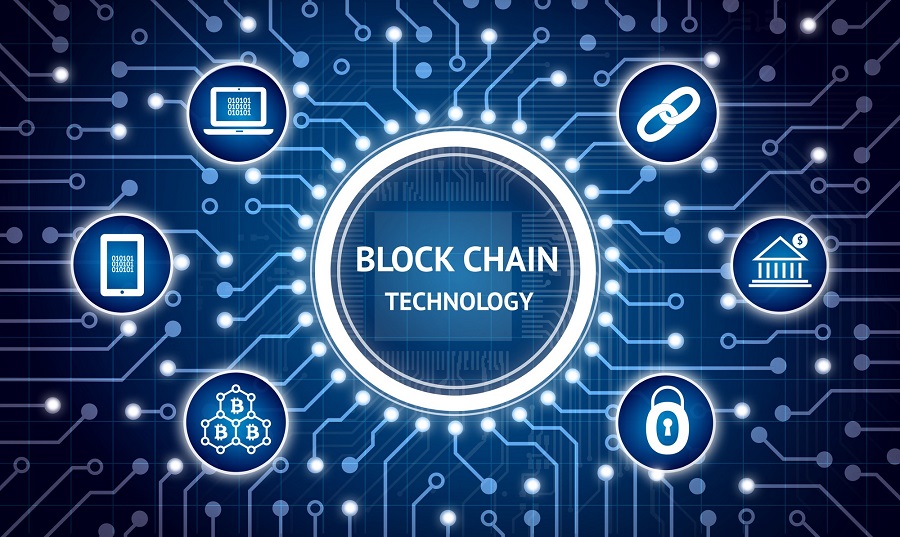
How Blockchain Technology is Transforming the Data Center Infrastructure

Even though cryptocurrency is still a controversial discussion topic, there seems to be a consensus that blockchain, the technology behind cryptocurrency, is revolutionary. Companies like Google and Goldman Sachs are actively investing in blockchain firms. So data centers and cloud hosting services need to prepare themselves to serve the requirements of these new blockchain-based companies. These businesses will need a lot of data center resources and cloud management services in the coming years.

Blockchain: A Simple Introduction

The journey of modern blockchain started with a 2008 white paper called Bitcoin: A Peer-to-Peer Electronic Cash System. The paper described a form of digital cash that can live on a distributed network without any centralized authority. The blockchain is the technology that supports this system.

A blockchain is basically a distributed digital ledger or database. The whole network contributes to its creation and maintenance. So there is no central authority who can manipulate the blockchain.

In a blockchain environment, when two parties have a transaction, they advertise it to the network. Various network nodes pickup multiple transactions and organized them into blocks. Then miners use their computers to add this block to the ledger or blockchain.

Miners need a lot of computing power to add the blocks to the blockchain because each block comes with a mathematical puzzle attached to it. Solving this puzzle takes computing resources. Miners are interested in this task because they are rewarded with tokens for adding a block to the blockchain.

The blockchain is an important technology due to its implications for business transactions. Before blockchain, a trusted third-party like a bank or a government institution was the only way to guarantee the integrity of a transaction between two parties. Blockchain eliminates that need. It opens up the possibility for business transaction between parties across the world. Strangers can transact with each other across countries and borders without the help of any financial or government institutions.

Blockchain-related Concerns for Data Center and Cloud Hosting Companies

The rise of blockchain technology means data center and cloud management services have to adjust to the changing realities on the ground. Here are some issues that data center managers should be aware of:

Elevated Demand for GPUs

Miners provide the computing power for blockchain cryptographic calculations. As the popularity of cryptocurrencies and blockchain-based applications increase, there will be more demand for computing power.

Data managers should be aware that blockchain-based calculations are best performed on graphical processing units (GPUs). AMD and NVIDIA graphics card prices have surged due to the rise in blockchain-based applications. Click here to visit original source.

Contact Details:
Telehouse America
7 Teleport Drive,
Staten Island,
New York, USA 10311
Phone No: 718–355–2500
Email: gregory.grant@telehouse.com
Monday, June 11, 2018

Neural Networks: How Data Centers are Catering to Future Demands


The progress of neural network algorithms is ushering a new age of artificial intelligence (AI) applications. Both machine learning and deep learning disciplines of AI use neural networks. The increase of these algorithms have implications for your data centers. Whether you have a data center in Los Angeles or Tokyo, your facility needs to be able to meet the server and network requirements and handle the extra workloads.

Basic Understanding of Neural Networks

The inspiration for artificial neural networks is the human brain. The brain has billions of neurons. The neurons communicate with each other and create complex decision trees. The human cognitive ability is the result of these decision trees. As a human being learns new things, new neurons are created and new connections are formed.

Artificial neural networks follow the same principle. To form an artificial neural network, data scientists feed training data to machine learning or deep learning algorithms. These algorithms use the known data to form neural networks. In other words, the algorithms use the input data to learn.

Suppose, you need a neural network that can recognize cats. In a machine learning scenario, data scientists will create a model and then feed the model with known cat images, also known as training data. Each node or neuron of the model would represent a particular quality and a certain weight. During the training process, the algorithms will recalibrate the weights of the nodes to improve the accuracy of the overall neural network results.

Depending on the complexity of the task, it can take a few hours or it can take days to process the training data and create a functioning artificial neural network. Computer processing power plays a vital role in forming these networks.

Changing Landscape of Data Centers due to Neural Networks

Neural networks are affecting data centers in two ways. It’s creating new requirements for data centers to serve AI-based applications. Also, AI-based applications help data centers optimize their own services. Here are some pointers to prepare for the future:

Rising Demand for GPU-based Processing

Any data center looking to attract AI-related businesses need to understand the importance of GPU-based processing in neural network applications. Visit original source.

Contact Details:
Telehouse America
7 Teleport Drive,
Staten Island,
New York, USA 10311
Phone No: 718–355–2500
Email: gregory.grant@telehouse.com

Wednesday, May 30, 2018

Transforming Your Business to More Digital Capable and cloud Consumable Applications and Services


The cloud landscape continues to evolve as businesses move to multi-cloud approaches for developing, deploying and delivering applications. This mix of public, private, on-premises, off-premises, cloud interconnects, and SaaS creates a number of strategy and implementation challenges. By partnering with managed IT services, New York businesses as well as those around the globe are finding ways to mitigate those challenges.

Though the needs of each business and the paths may be slightly different, they all can deliver cloud consumable applications and services needed by a digital capable business. The shared goal is to take advantage of all available options to efficiently, flexibly and cost effectively deliver a growing portfolio of applications and services. These managed services solutions enable efficient application management across providers and models.

The leading managed services providers can deliver all connectivity solutions as well as access to a huge list of cloud providers. This helps businesses develop a detailed approach to their digital operational and customer facing capabilities.

The first step is to start with business goals that inform decisions about application and services migration, placement, management and monitoring. These managed services solutions will provide a centralized ability to weigh costs, access, security, compliance and myriad other factors to come up with an answer across all the varying cloud formations.

Data center managed services provide end customers with access to:


  • IT expertise for engineering, management and monitoring of assets and environments via best practices that support ad hoc and ongoing needs
  • New skills and solution provider resources across infrastructure, technical management and cross vendor application management

Application access and uptime is critical to every business, so monitoring becomes an important component to cloud data center operations.

Source.

Contact Details:
Telehouse America
7 Teleport Drive,
Staten Island,
New York, USA 10311
Phone No: 718–355–2500
Email: gregory.grant@telehouse.com

Monday, May 14, 2018

3 Reasons Why You Should Adopt Hybrid Cloud Strategies


The public cloud was once hailed as the premier option for unlimited, accessible data storage. However, on-premise private cloud solutions still offer better security, speed and control – especially when managing private data. Find out why hybrid cloud strategies are the best way for companies to enjoy the benefits of both private and public cloud storage – and how colocation service providers support such needs.

Workflows and Partnerships


Colocation facilities can support the collaboration benefits of a hybrid cloud strategy in multiple ways. Foremost, tenants in a colocation service provider can securely access one another’s applications and data upon mutual request. This creates a safe space in which to collaborate, expanding each businesses capabilities in a secure way that wouldn’t otherwise be achievable.

Another benefit of hybrid cloud models is that they offer decreased latency, which is the length of delay between a service and a request. Latency is often improved when cloud servers are geographically closer to the request source, as the request has a shorter distance to travel. Since a colocation service provider allows companies to store their private cloud in a nearby location, this can help increase latency when the public cloud isn’t as fast. In turn, this helps increase workflows by speeding up requests.

Security, Control, and Colocation Service Provider


Today’s businesses are seeking increased flexibility in data management without having to sacrifice high-stakes security. This is especially true for the healthcare, finance and retail industries, which often have certain compliance regulations regarding how and where data can be stored.

Although these companies can’t store such data on the public cloud, they often still need access to applications and tools that are available only on the public cloud. Data center colocation providers are a great solution to these security and accessibility needs because they keep private patient and customer information secure while meeting strict requirements. Click here to visit original source.

Contact Details:
Telehouse America
7 Teleport Drive,
Staten Island,
New York, USA 10311
Phone No: 718–355–2500
Email: gregory.grant@telehouse.com

Tuesday, May 1, 2018

Understanding The Role of Artificial Intelligence in The Data Center Industry

The amount of global data being stored, processed and managed continues to grow exponentially each day. In turn, artificial intelligence is playing a pivotal role in helping data center service providers capture, process and analyze this data at a faster and more powerful rate than ever before. From automated monitoring systems to advanced energy savings, here’s how artificial intelligence is improving the operations and efficiency of global data centers.

What Artificial Intelligence Means for Data Center Service Providers

Artificial intelligence isn’t a new concept, and tools like face detection and voice recognition already play a major role in our daily lives. Strava, Inc. Staff Engineer Drew Robb adds that object identification, classification, and other forms of geographic and identity detection are leading AI uses in the enterprise market.


All of these applications place an increased strain on data centers because they require increased data storage and processing in order to run. Managing this immense increase in data requires that the data center industry scale, adapt, and acquire more computing power. Artificial intelligence enables the data center service provider to meet such demands in a variety of ways, including operational automation, elastic computing power and predictive maintenance.

Improving Data Center Efficiency

Increased data processing requires that data centers keep hardware cool. With more data to process and hardware working harder, however, this drives up energy costs and increases the overall resource footprint of data centers.

Fortunately, machine learning is playing a vital role in helping companies understand their data center energy consumption. As explained in Datacenter Dynamics, artificial intelligence is being used to analyze temperature set points, evaluate cooling equipment and test flow rates. The use of AI-powered smart sensors can receive data from numerous sources and relay that information as environmental, electrical and mechanical insights. In addition to detecting sources of energy inefficiencies, machine learning can also be automated to make informed decisions that reduce data center energy consumption and cut costs.

Software solutions business manager Stefano D’Agostino adds that, “innovative startups are using intelligent machines with self-learning algorithms to optimize the allocation of the IT load itself so that optimal cooling can be achieved.” The benefits of such technology is already being realized, and statistics from The Data Center Science Center show that advancements in UPS efficiency and cooling energy losses have helped ordinary data centers cut physical infrastructure costs by 80% over the last decade.

This shows that, even though artificial intelligence technology is partly responsible for an increase in data center processing, it can also be used to mitigate its own increases in energy consumption.

Strengthening Data Center Security

In addition to improving energy efficiency, AI can also improve security of a data center. New York businesses rely on Telehouse because we’re committed to proactively managing customer data and reducing security risks wherever possible. We’re also tuned in to the latest advancements in AI security applications, which can screen and analyze data for security threats at a more thorough and rapid rate. AI can also help assess normal and abnormal patterns, detect malware and spam, identify weak areas and strengthen protection from potential threats.

Detecting and Reducing Downtime
Another way that artificial intelligence can influence the modern data center service provider is through improved outage monitoring. In fact, AI monitors have the ability to predict and detect data outages before they even occur. They also have the ability to track and detect server performance, disk utilization, and network congestions.

Today, artificial intelligence offers advanced predictive analytics services that make it easier and more reliable to monitor power levels and potential trouble areas. Click here to visit original source....

Contact Details:
Telehouse America
7 Teleport Drive,
Staten Island,
New York, USA 10311
Phone No: 718–355–2500
Email: gregory.grant@telehouse.com

Tuesday, March 27, 2018

Solutions for Disaster Recovery that Protect Smart Cities

Based on a statement from Gartner, a technology research and advice firm, there are roughly 2.3 billion connected things smart cities such as New York, Tokyo, and London use. Compared to 2016, that number represents a 42 percent increase. Soon, smart cities will be the catalyst behind an economic boom and improved quality of life for people living in them.

As the backbone of smart cities, it is imperative that data centers and colocation sites have the right disaster recovery solutions in place. Not only will this ensure flawless connectivity and top data security but also public health and safety.

To streamline city services, smart cities rely on rich data in real time. Software, hardware, and geospatial analytics can improve on livability and municipal services. With enhanced sensors, the Internet of Things (IoT) can reduce the amount of energy consumed by street lights and preserve resources by regulating water flow.

Due to the location of many smart cities, as well as other potential risks, disaster recovery cloud services are vital. Disaster recovery providers protect power and communication caused by power outages, floods, and even cyber attacks. To continue reading and visit source click here.